How to Choose a Large Handcrafted Mezuzah Case That Fits Your Parchment
Home » How to Choose a Large Handcrafted Mezuzah Case That Fits Your Parchment
Imagine a couple returning home from abroad with a stunning, beautifully crafted mezuzah case — large, elegant, and impressive. Only when they try to place their parchment inside do they discover it doesn’t fit. They roll it tighter. It gets stuck halfway. They pull it out, and the edge frays.
It happens far more often than people think, almost always for one simple reason: choosing a mezuzah case by how it looks on the outside, rather than by what it can hold inside.
What you’ll find in this guide
How to measure your existing parchment and match it to a large mezuzah case
The differences between 10 cm, 12 cm, and 15 cm parchments — and which case fits each size
Why “large” in a product description doesn’t always mean “fits a large parchment”
How to measure your doorframe and keep proper proportions at the entrance
Correct installation methods — adhesive vs. screws — and how to protect the parchment long‑term
What affects the price of a handmade mezuzah case compared to mass‑produced designs
What is a large designer mezuzah case and who is it for?
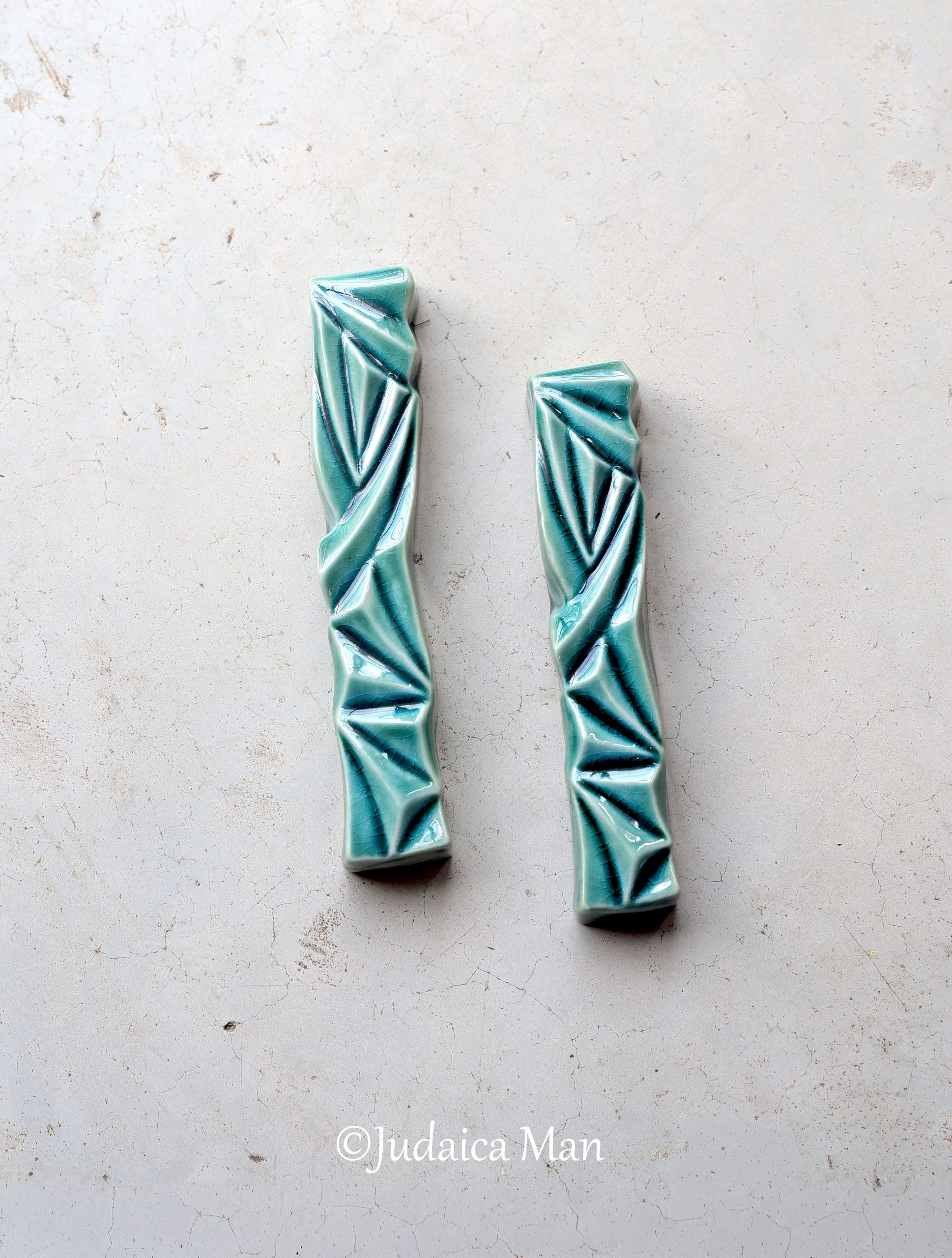
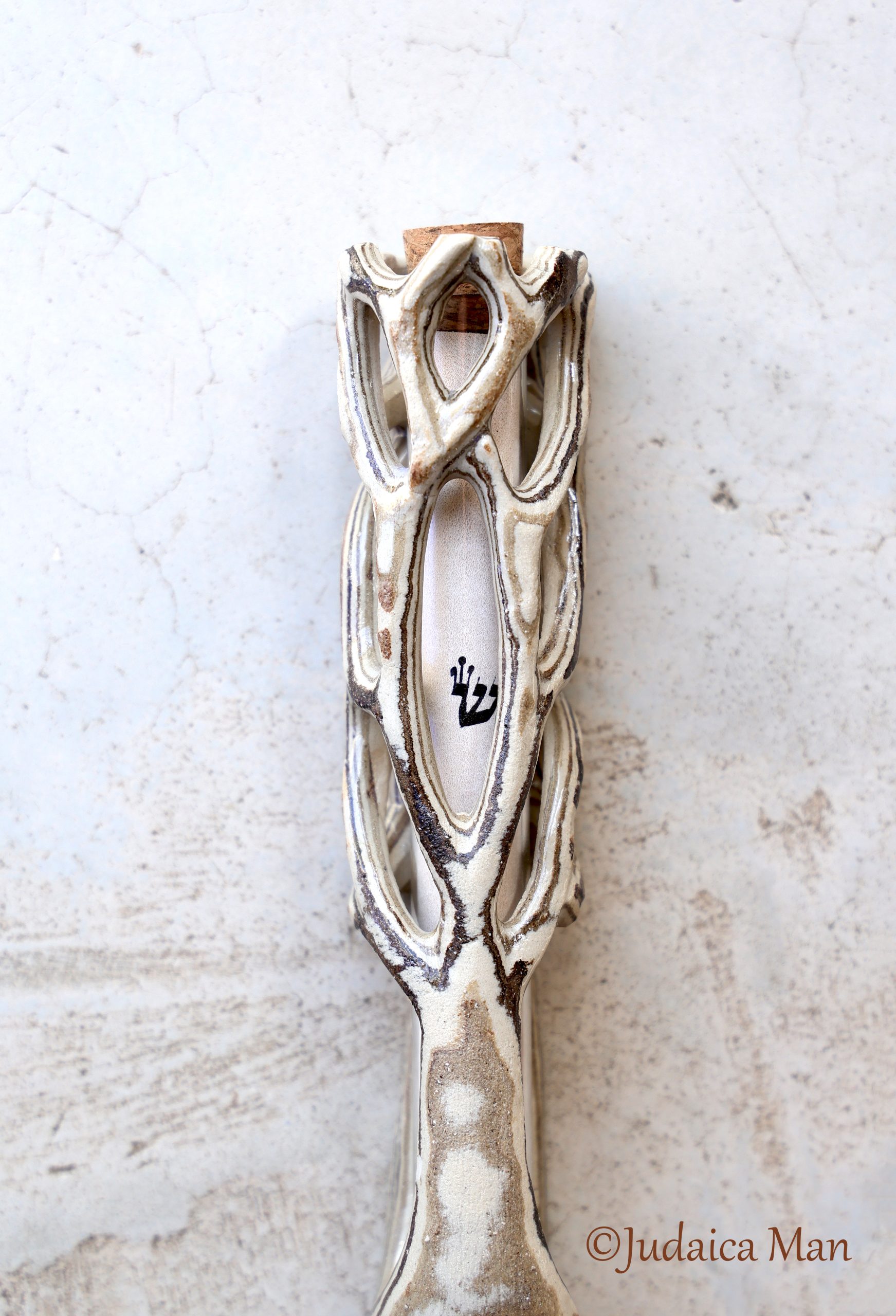
A large designer mezuzah case is a piece with real presence — the kind you notice
from the moment you approach the entrance. It’s created for main entry doors, courtyard gates,
or any central passageway in the home. Beyond its spiritual purpose, it becomes part of the
home’s visual language, blending holiness with thoughtful design.
Who is it ideal for?
For anyone with a wide doorframe or a substantial entrance door where a small mezuzah simply
gets lost. For families moving into a new home who want the entrance to feel intentional and
welcoming. And for anyone choosing a meaningful gift — something that will remain on the
doorframe for decades, not fade after a year.
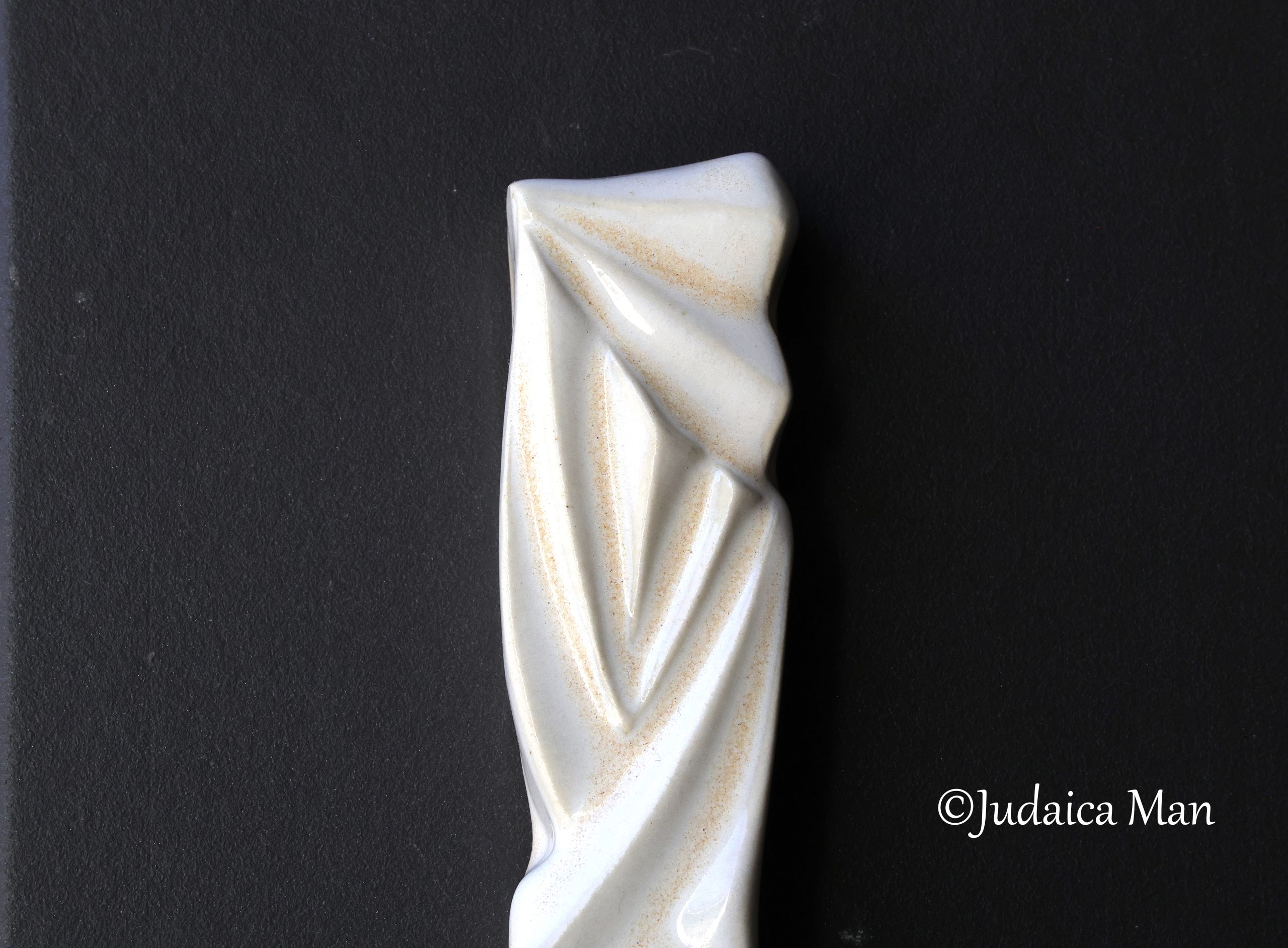
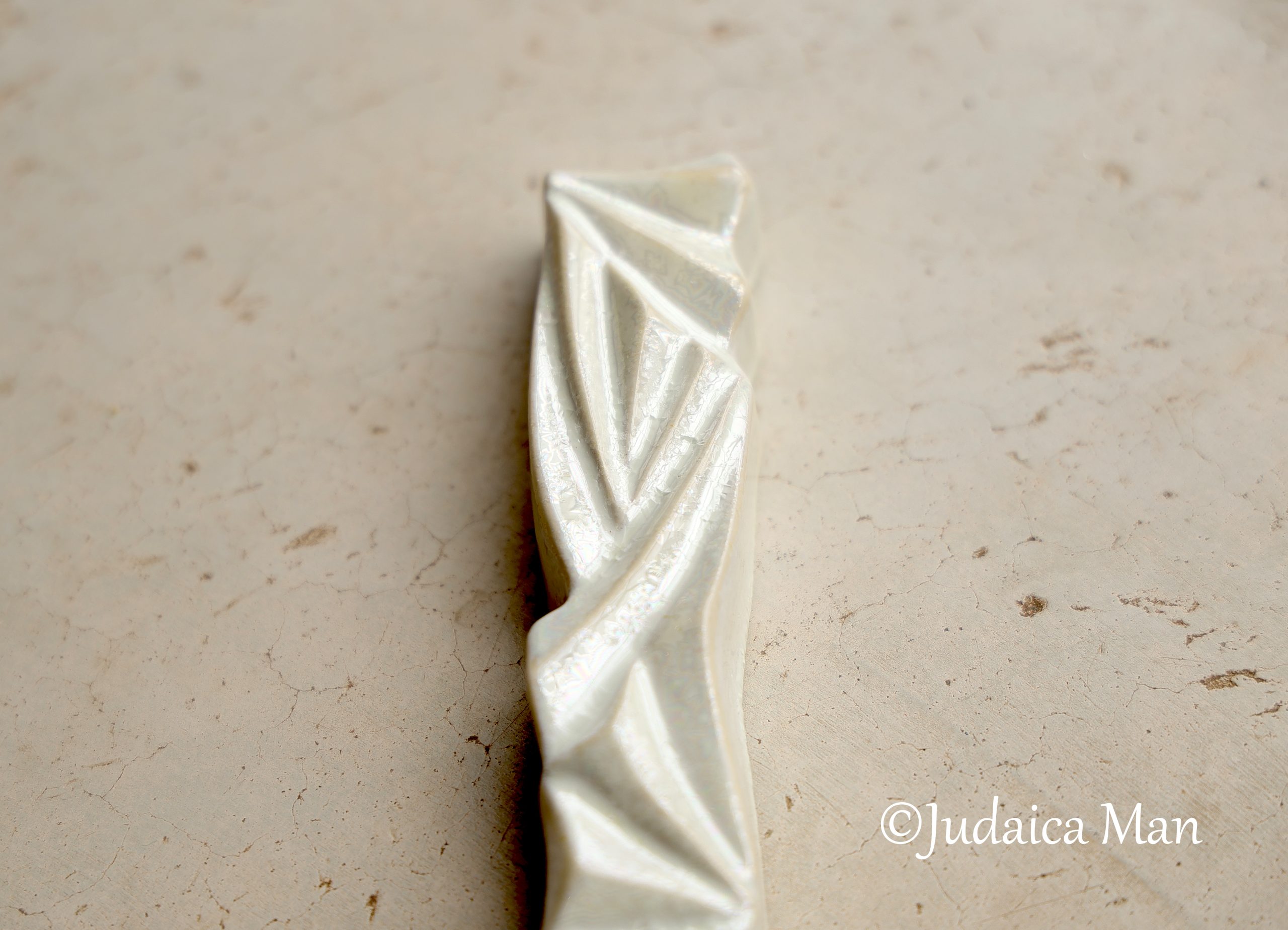
At JudaicaMan, we see this most clearly in custom orders. One person requests ceramic in warm
sand tones to complement Jerusalem stone; another asks for subtle gold accents that catch the
morning light. It’s a modern expression of “This is my God and I will glorify Him,” crafted in a
way you touch every day as you leave the house.
A large designer mezuzah case suits a wide entrance doorframe — not every doorway in the home.
How to choose the right size for a large designer mezuzah case
Most people choose a mezuzah case the wrong way around — they fall in love with the design first
and only then check whether their parchment fits. The correct order is the opposite: first the parchment, then the case.
If you already have a parchment, gently remove it from its current case and measure its length in
centimeters. If you don’t have one yet, decide on the size — 10 cm, 12 cm, 15 cm (sometimes 20 cm) —
and choose a mezuzah case that comfortably accommodates that parchment.
Why “fits parchment up to X cm” matters more than the case’s outer length
A mezuzah case can be 20 cm tall on the outside and still fit only a 12 cm parchment.
How? Decorative bases, curved tops, and artistic elements often reduce the internal cavity.
At JudaicaMan, when we sculpt ceramic mezuzah cases, we design the inner cavity first — the art
comes afterward.
Always check the specification that states “fits parchment up to X cm.”
If it’s missing, ask before purchasing.
Leave “breathing room” for the parchment
A simple rule: choose a case with an internal cavity 0.5–1 cm longer than your parchment.
A parchment is rolled, and if the cavity is too tight, you’ll end up pushing, forcing, and bending it.
A bent parchment develops creases, and over time those creases can turn into cracks in the letters —
which affects not only aesthetics but also halachic validity.
Always measure your parchment before choosing a mezuzah case — never the other way around.
What’s the difference between 10 cm, 12 cm, and 15 cm mezuzah parchments?
The difference is simply the length of the parchment — and everything else follows from that.
A 10 cm parchment is compact, a 12 cm parchment is the most common size, and a 15 cm parchment gives the scribe more room for clear, spacious writing.
Here’s something important to understand: larger parchments allow for larger letters.
A scribe writing on 15 cm works more comfortably, the letters come out fuller and more balanced,
and the chance of halachic issues during inspection is lower.
On a 10 cm parchment, the writing is naturally tighter — which means choosing a skilled,
God‑fearing scribe is even more critical, and the parchment may be more prone to wear over time.
Parchment Size
Recommended Placement
Main Advantage
What to Consider When Choosing a Case
10 cm parchment
Interior doors, bedrooms, narrow hallways
Compact and unobtrusive
Ensure the inner cavity doesn’t compress the parchment
12 cm parchment
General use, main rooms, apartment entrances
Balanced size and visibility
Most common size — widest selection of designs
15 cm parchment
Main entrance, courtyard gates, wide openings
Enhanced beauty and halachic elegance
Requires a long inner cavity and full weather sealing
When does a 15 cm parchment feel “just right” rather than too large?
A 15 cm parchment feels perfect on a main entrance door — especially in private homes with
wide stone frames or broad aluminum doorframes.
There’s physical space for it, and there’s also a desire to make a statement about the home
before you even step inside.
A larger parchment allows the scribe to write fuller, more spacious letters — considered more elegant and often more durable.
Which mezuzah case fits a 10 cm parchment?
A 10 cm parchment is the ideal choice for doorways that aren’t the main entrance —
children’s rooms, balconies, interior hallways, or any narrow passage.
In rental apartments with slim doorframes, it’s often the most practical option.
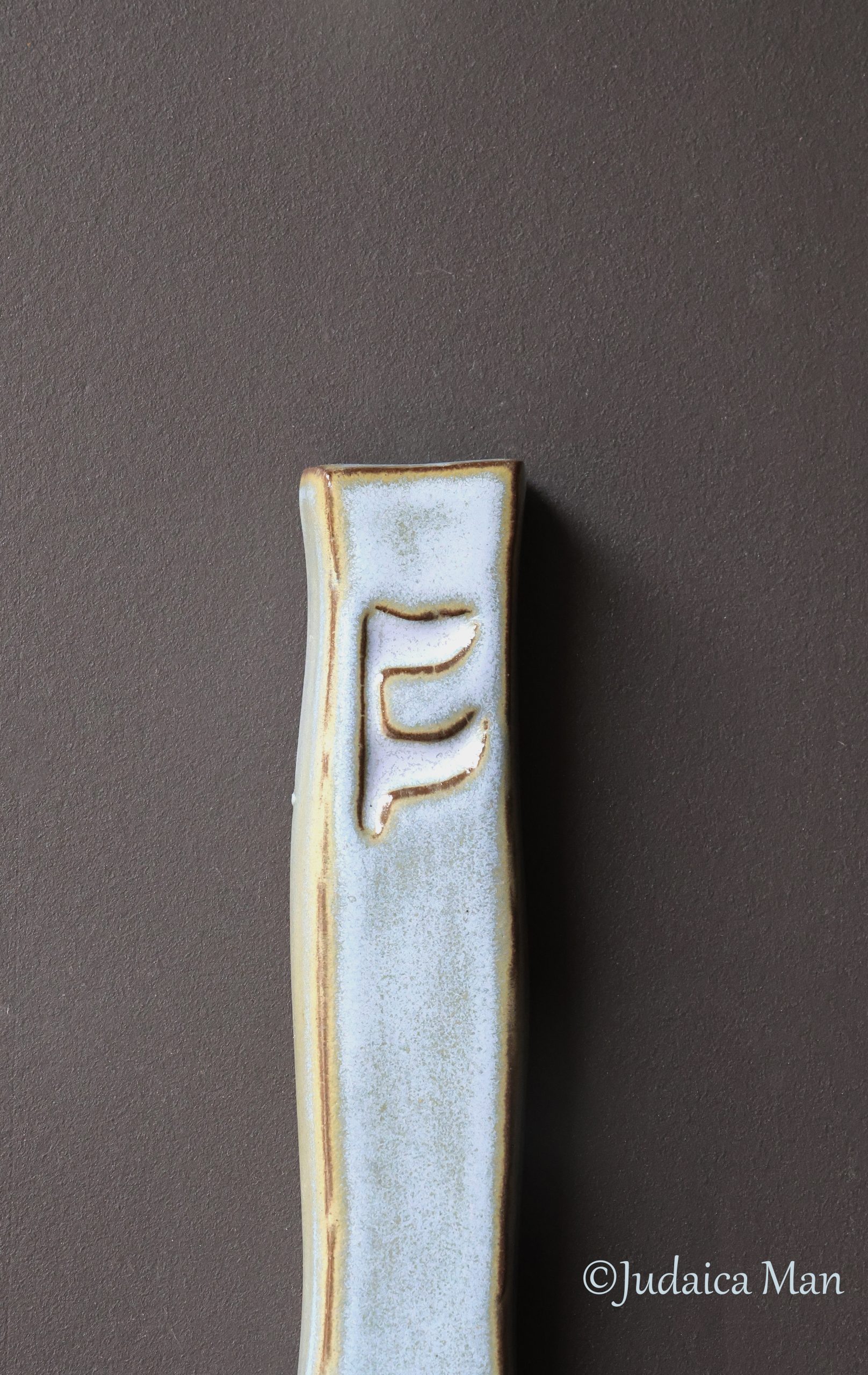
But a small parchment doesn’t mean the mezuzah case has to feel small or plain.
You can choose a tall, slender ceramic design, a cast‑brass mezuzah with a deep patina, or olive wood
engraved with a graceful “Shin.”
The outer presence can be elegant even when the inner cavity is only 11 cm.
At JudaicaMan, for interior doorways we often recommend designs with finer brushwork, since people
see them up close.
One thing to consider in children’s rooms: choose a mezuzah with a slimmer profile.
A deep or bulky case in a narrow hallway tends to get bumped by shoulders, strollers, or chairs.
A flatter silhouette avoids unnecessary wear.
A 10 cm parchment is perfect for narrow interior doorways — and a slim profile helps prevent bumps in tight spaces.
Which mezuzah case fits a 12 cm parchment?
A 12 cm parchment is the “gold standard” in most Israeli homes.
It works beautifully for apartment entrances, central rooms, and everyday doorways — which is why nearly every artist and studio creates designs for this size.
The result? You get the widest and most diverse selection of mezuzah cases.
If you want a mezuzah with more visual presence while still using a 12 cm parchment, there are two design approaches we often use at JudaicaMan:
1. Width instead of height.
A mezuzah case with artistic side borders, a curved back, or a rounded base creates a sense of volume without increasing the internal cavity.
It looks substantial, but still fits a 12 cm parchment comfortably.
2. Color and finish.
A deep terracotta body with hand‑painted 24‑karat gold accents appears larger and more dramatic because gold reflects light and draws the eye.
Sometimes color alone creates the “large mezuzah” effect without changing the size.
A 12 cm parchment is the most common size — offering the widest variety of mezuzah designs.
Which mezuzah case fits a 15 cm parchment?
A 15 cm parchment requires a mezuzah case designed specifically for this size —
there are no shortcuts here.
The inner cavity must be at least 15.5–16 cm long, and just as importantly, it must have
sufficient depth.
A parchment of this length rolls into a wider cylinder, and if the cavity is too narrow, the
parchment will bend even if the length technically fits.
For exterior installations, we pay special attention to sealing and durability.
A proper mezuzah case for outdoor use should have:
A snug, secure top cap that stays in place
A fully sealed glass tube or inner chamber tested for water resistance
High‑grade outdoor adhesive or screw‑mounting options
A large mezuzah installed on an exposed entrance faces sun, rain, dust, and temperature changes.
An open bottom or poorly sealed cavity invites moisture — and moisture is the number‑one cause of
parchment damage and halachic invalidation.
If you’re choosing a mezuzah case for a large, elegant parchment, we recommend exploring our
mezuzah case collection
which includes designs built specifically for 15 cm parchments.
You can also contact us for a custom piece tailored precisely to your parchment’s size and your
entrance’s design.
A mezuzah case for a 15 cm parchment must have a deep inner cavity and strong weather‑proof sealing — especially for exterior installation.
Does “large mezuzah case” always mean it fits a 15 cm parchment?
No — and this misconception is responsible for most returns in the mezuzah world.
The word “large” in a product title almost always refers to the outer dimensions, because
that’s what appears in photos and marketing.
A ceramic mezuzah with thick artistic borders may look monumental on the doorframe yet fit only a
10 cm parchment.
A brass mezuzah with a wide decorative frame may appear oversized but hold only a 12 cm parchment.
So what should you check?
Not the outer length.
Look for the line that says “Fits parchment up to X cm.”
If the listing shows only the outer size, ask before buying.
At JudaicaMan, every mezuzah case leaves the studio with a clear specification of the parchment size
it was sculpted for — because we design around the parchment, not the other way around.
The outer size of a mezuzah case does not indicate the parchment size it holds — always check the exact specification.
How to measure your doorframe so a large mezuzah looks proportional
Grab a measuring tape and head to the door.
Three measurements — two minutes of work.
1. The visible width of the doorframe — the part that remains exposed when the door is closed. 2. The height from the floor to the upper third of the doorway, where the mezuzah should be placed. 3. The distance between the mezuzah’s placement area and the door handle or lock.
A large mezuzah that hits the handle every time the door opens will eventually crack.
A practical rule of thumb
A large mezuzah case should not occupy more than half of the visible doorframe width.
A 12 cm frame comfortably fits a mezuzah 5–6 cm wide.
A 7 cm frame, however, looks cramped with a 5 cm mezuzah.
In such cases, choose a vertical design: tall, narrow, with an artistic detail at the top that draws
the eye upward rather than sideways.
A mezuzah should never take up more than half the visible width of the doorframe — that’s the key to good proportions.
Where is the best place to install a large mezuzah?
The main entrance.
It’s the doorway everyone passes through several times a day, the first thing guests see, and the
place where beautifying the mitzvah carries its fullest meaning.
If you have a courtyard gate, that’s also an excellent location — provided the mezuzah case is
designed for outdoor conditions.
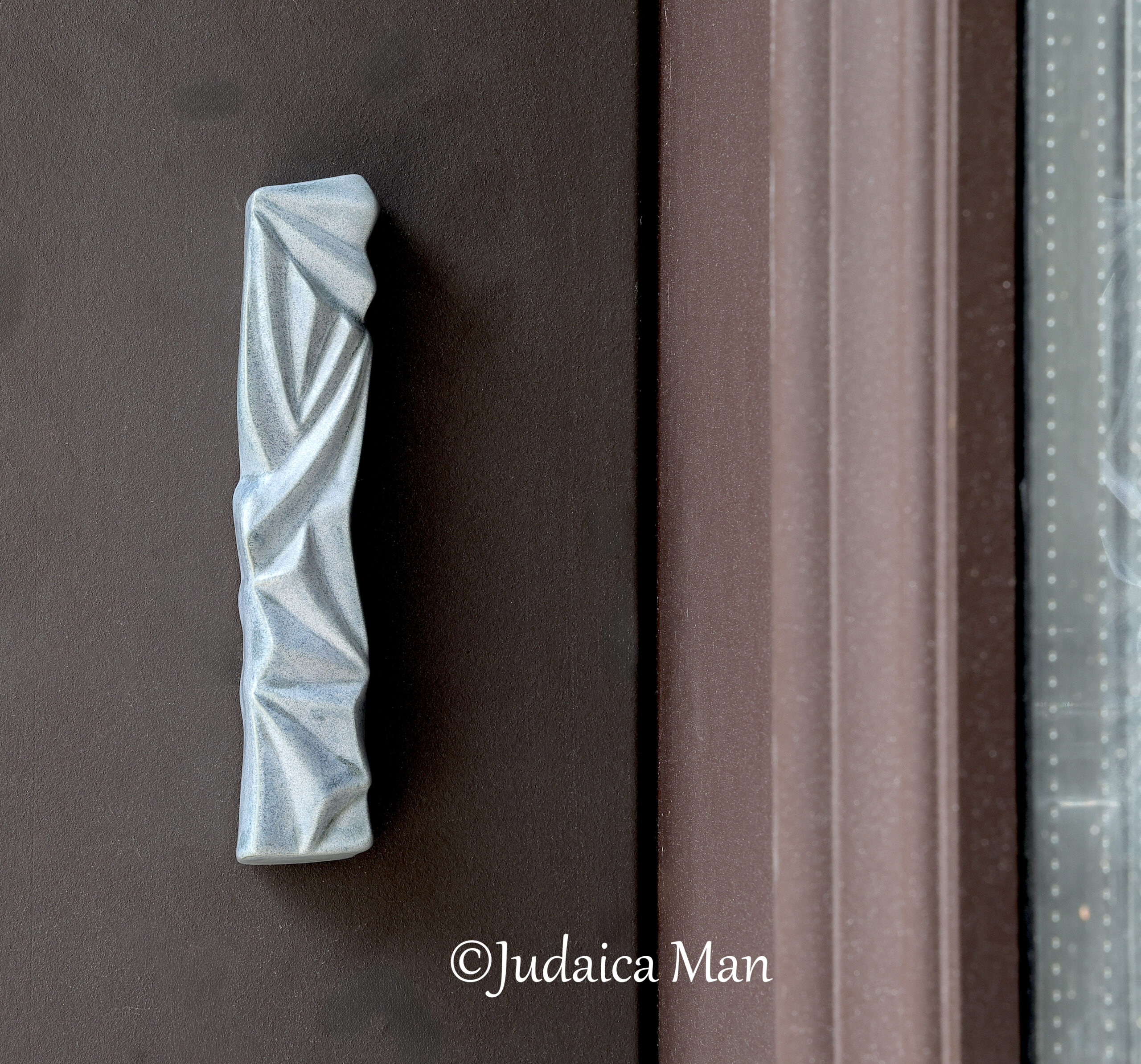
Inside the home, we recommend consistency: the same design language throughout the rooms, usually
in smaller sizes.
This creates harmony and also highlights the entrance mezuzah as the central piece.
And what about the entrance wall itself?
A striking mezuzah next to a completely empty wall can feel bare.
Many of our clients choose to pair it with a hand‑painted
Home Blessing ,
or sometimes an “Eshet Chayil” artwork or a framed verse.
When everything is created by the same hand and palette, the entrance gains a warmth you feel
without planning.
The main entrance is the most fitting place for a large, beautifully designed mezuzah.
Is a large mezuzah case suitable for interior doors?
Sometimes yes — and sometimes it becomes a mistake within a month.
Suitable:
Wide passageways between the living room and dining area, a study or library entrance, or double
doors.
These spaces have room, no constant bumping, and a large mezuzah adds balance rather than clutter.
Less suitable:
Kitchen doors, children’s rooms that open and close dozens of times a day, or a reinforced safe‑room
door.
These areas experience daily friction, and a protruding ceramic mezuzah will take hits.
If you still want something special there, choose a slim profile, durable finish, and a 12 cm parchment.
A large mezuzah suits wide interior openings without frequent movement — but not doors that open constantly.
How to install a large mezuzah neatly and safely
A large mezuzah weighs more than a small one, so installation matters.
For exterior doors, use high‑quality outdoor adhesive or screws, depending on the material of the
doorframe.
Clean the surface thoroughly, remove dust and oils, press firmly, and allow proper drying time.
Rushing the installation is the main reason mezuzot fall.
What should you check to protect the parchment long‑term?
A mezuzah case must protect the parchment from moisture, dust, and bending.
Ensure the case has:
A fully sealed bottom
A secure top cap
An inner cavity that doesn’t compress the parchment
Weather‑resistant materials for exterior use
A mezuzah case that allows moisture inside — even slightly — can damage the parchment over time.
Choose quality materials and proper sealing.
Which design style complements a large mezuzah?
A large mezuzah becomes part of the entrance’s visual identity.
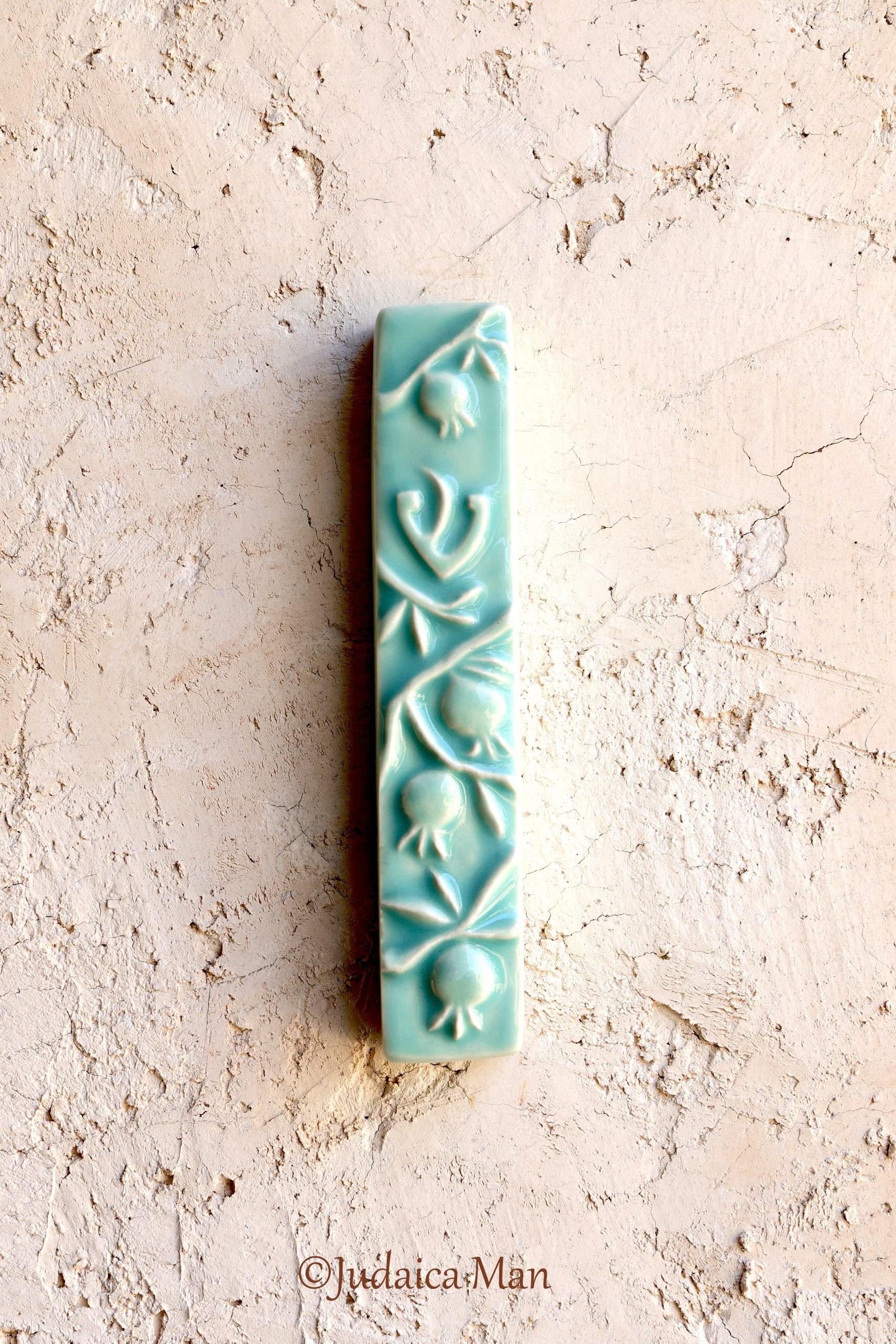
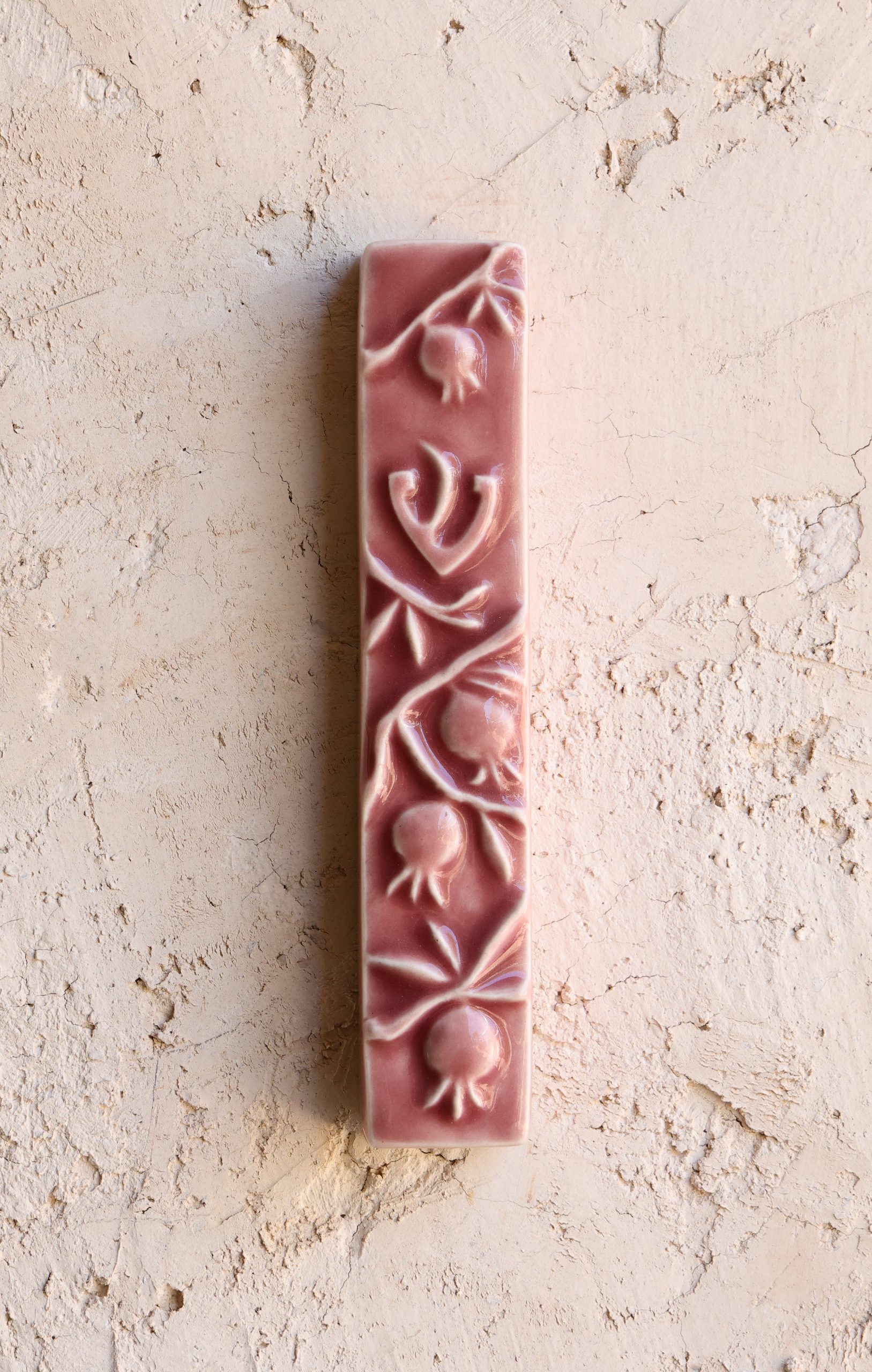
Choose a style that speaks the same language as your home — earthy ceramics for natural stone,
clean lines for modern aluminum frames, warm tones for wooden doors, or gold accents for a more
luxurious feel.
What affects the price of a large designer mezuzah?
Factor
Mass‑Produced
Handmade in Studio
Design
One mold for thousands of units
Each piece receives individual attention
Decoration
Printed or sticker‑based
Watercolor, gouache, calligraphy, 24k gold — all by hand
Kiln Firing
Single quick firing
Two or sometimes three firings
Uniformity
Identical pieces
Each piece has its own character
Customization
None
Color, design, parchment size
Size also plays a role.
A mezuzah case for
Size also plays a role.
A mezuzah case built for a 15 cm parchment requires more material, longer drying time, and stronger structural support.
Outdoor mezuzot receive additional glazing and sealing layers to withstand sun, rain, and humidity — all of which influence the final price.
A handmade mezuzah with original artwork and 24k gold detailing requires significantly more time and craftsmanship — which naturally makes it more expensive than mass‑produced pieces.
Should you buy the parchment together with the mezuzah case?
In most cases — yes.
When the parchment and mezuzah case are purchased together, the fit is checked in advance and there are no surprises.
You won’t discover on the evening of a housewarming that the parchment doesn’t fit.
There’s also peace of mind.
A 10 cm, 12 cm, or 15 cm parchment written by a certified, God‑fearing scribe — and inspected properly — is worth the difference in price.
A cheap parchment found in a drawer, with no idea who wrote it or when it was checked, is not a real saving.
If you already have a parchment, measure it before ordering a mezuzah case.
If you’re unsure, send us a photo with a measuring tape next to the parchment via WhatsApp at
+972‑52‑338‑3094 .
We’ll tell you exactly which case fits.
Measuring the parchment before ordering prevents situations where the parchment doesn’t fit the chosen mezuzah case.
Common mistakes when buying a large mezuzah
1. Not measuring the doorframe.
People buy based on a perfect photo online, only to discover at home that the mezuzah is wider than the frame itself.
2. Forcing a large parchment into a small case.
We’ve said it before — and we’ll say it again — because this is what ruins parchments.
3. Choosing materials unsuitable for the environment.
Unprotected wood on a rainy exterior frame, or finishes that peel after one summer in harsh sunlight.
For exterior entrances, always confirm the mezuzah is designed for outdoor use.
4. Rushed installation.
Adhesive on a dusty frame, no pressure, no drying time — the mezuzah falls, and then comes the sad phone call.
5. Choosing the most dramatic design without considering the home.
A beautiful mezuzah that doesn’t match the entrance looks out of place.
A more modest piece that feels “at home” is often the better choice.
Most mistakes come from not measuring the doorframe — and from forcing a large parchment into a small case.
How do I measure the length of a mezuzah parchment?
Place the parchment gently on a flat surface (no need to unroll it) and measure its length from end to end in centimeters.
Do I need to remove paint from the doorframe before installing a mezuzah?
Not necessarily. Clean the surface thoroughly from dust and oils and let it dry.
If the paint peels when touched, remove the loose layer so the adhesive bonds to a solid surface.
What if my doorframe is narrow but I still want a mezuzah with presence?
Choose a tall, narrow mezuzah — vertical rather than wide.
A decorative element at the top creates height and presence without overwhelming the frame.
Is a 15 cm parchment more durable than a 10 cm parchment?
Durability depends on the quality of the parchment, ink, and storage conditions.
However, larger parchments have more spacious lettering, so minor wear affects
Is a 15 cm parchment more durable than a 10 cm parchment?
Durability depends on the quality of the parchment, the ink, and the environment.
However, larger parchments have more spacious lettering, so small cracks or minor wear affect them less quickly.
This often makes a 15 cm parchment a more resilient long‑term choice.
Can I order a custom mezuzah case?
Absolutely.
A large part of our work is custom design: precise parchment sizing, colors that match your entrance, or hand‑painted family names in calligraphy.
Write to us at
info@judaicaman.com
or message us on WhatsApp — we ship throughout Israel and worldwide.
What remains on the doorframe
A mezuzah is one of the few objects in a home that you touch every single day.
You leave for work, your hand rises, your fingers touch the case, and your lips follow.
After twenty years, the glaze is still the same color, still shining quietly in its place.
That’s why it’s worth investing in two things at once:
the technical fit — ensuring the parchment sits comfortably and stays protected —
and the soul of the piece, something that brings you joy every morning.
At JudaicaMan, every mezuzah is crafted by hand in our studio, out of love for the craft, for the people of Israel, and for this beautiful land.
If you’re unsure about sizes or styles, just reach out.
Helping you choose is one of our favorite parts of the work.